
ICELAND PUFFINS &
OTHER BIRDS
JUNE 23 - JULY 3, 2027
JULY 2-13, 2027 (1 left)
6 days photographing puffins on a tiny island on the Arctic Circle and 3 days photographing other arctic birds in the remote northeast of Iceland.
This unique bird photography tour is split into two phases. The first one being on Iceland's mainland, mostly around Lake Myvatn and the remote northeast peninsula of Langanes. One of the highlights will be a Northern Gannet colony at Karlinn. The second phase of the trip will take place on the Arctic Island of Grimsey, off the north coast of Iceland, where we'll spend four days photographing Puffins and other North Atlantic seabirds, such as Razorbills, Murres, Godwits, Arctic Terns and many more species.
TRIP HIGHLIGHTS
• 9 nights of Accommodation
- All Transportation Included (round-trip air between Reykjavik & Akureyri, Ferry to Grimsey, ground transportation throughout tour)
- All meals while on Grimsey and Langanes
• 6 Days Photographing Puffins & Other Birdson the tiny Island of Grimsey
• 3 Days Photographing other Arctic Birds in the remote Northeast of Iceland
• We Will Squeeze in some Landscape Photography
• Coaching from a highly experienced photo leader








What to Expect
This spectacular photo adventure will explore some of the least visited areas of Iceland and will be conducted in two parts:
3 days exploring the Langanes Peninsula in remote northeast Iceland.
Visiting the Langanes Peninsula for bird photography is one of Iceland’s most rewarding—and demanding—experiences. The short version: it’s raw, remote, wind‑shaped wilderness where tens of thousands of seabirds nest on towering basalt cliffs, giving photographers rare access to puffins, gannets, guillemots, razorbills, Arctic terns, and even Arctic foxes.
A trip to Langanes feels like traveling to the edge of the world. The peninsula is a 40‑km windswept finger of land jutting into the Greenland Sea, ending at the remote Fontur lighthouse. The roads are rough gravel, the landscape is treeless and abandoned, and fewer than 50 people live here today.You drive through empty coastline, scattered old farms, and long Arctic views. Photographers often describe the day as “slow”—not because nothing happens, but because the place forces you to pay attention.
6 days exploring Grimsey Island.
Visiting Grímsey Island for bird photography is an immersion into one of Iceland’s densest and most accessible seabird colonies, set under the midnight sunand perched directly on the Arctic Circle. The experience combines close‑range puffin encounters, dramatic cliffs, endless golden light, and a tiny island community of about 20 human residents...and over a million nesting seabirds.
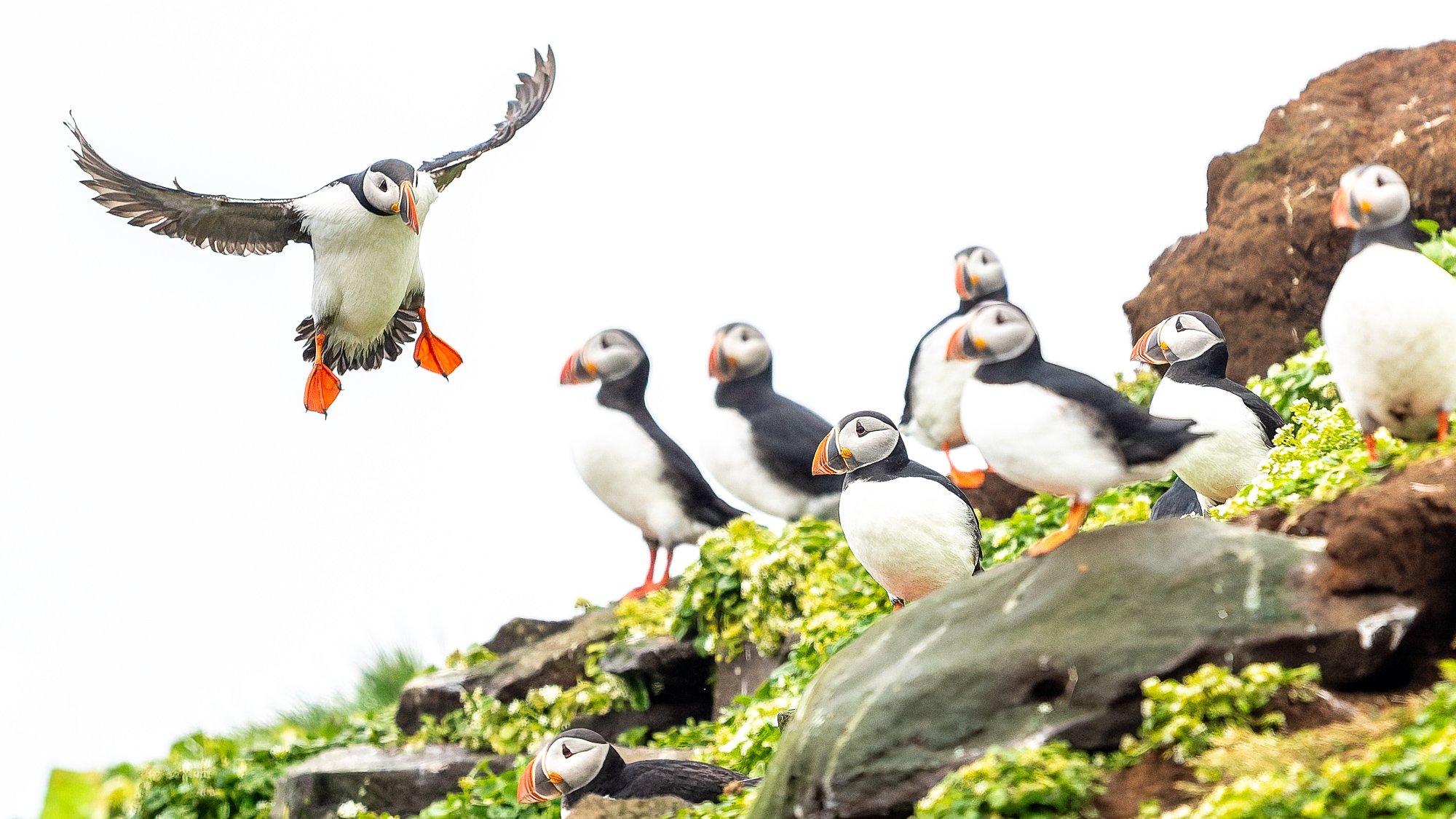
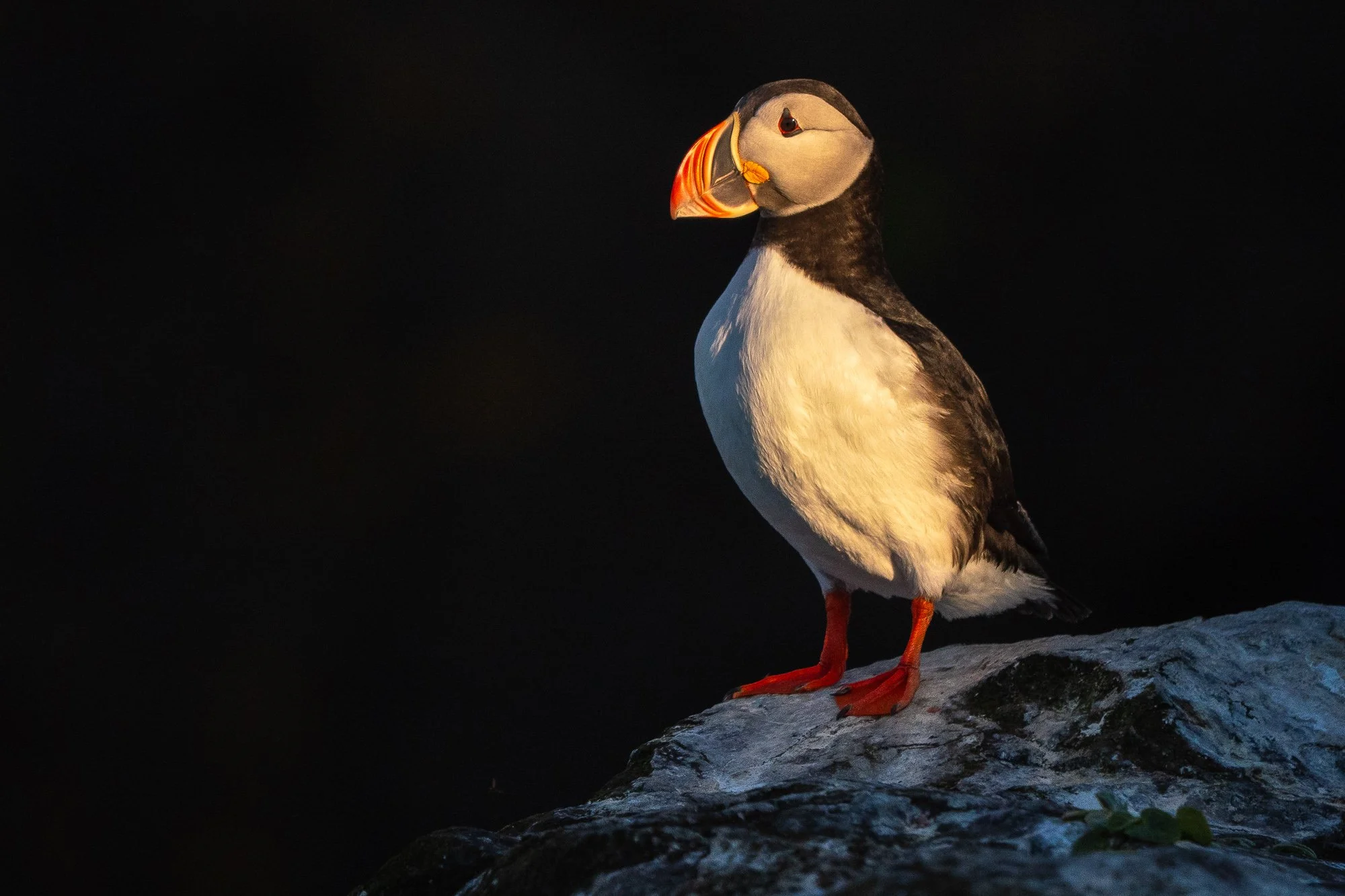
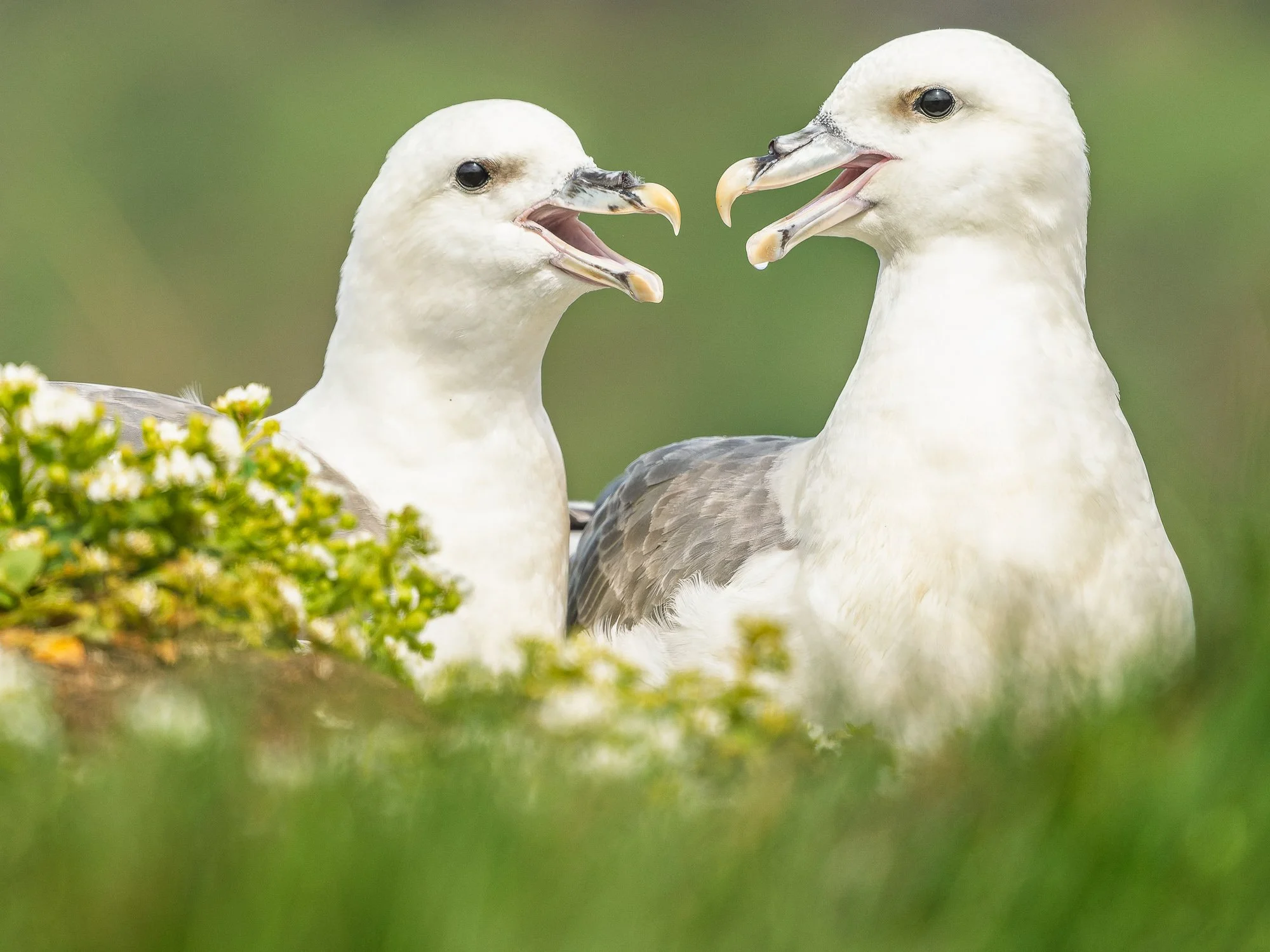
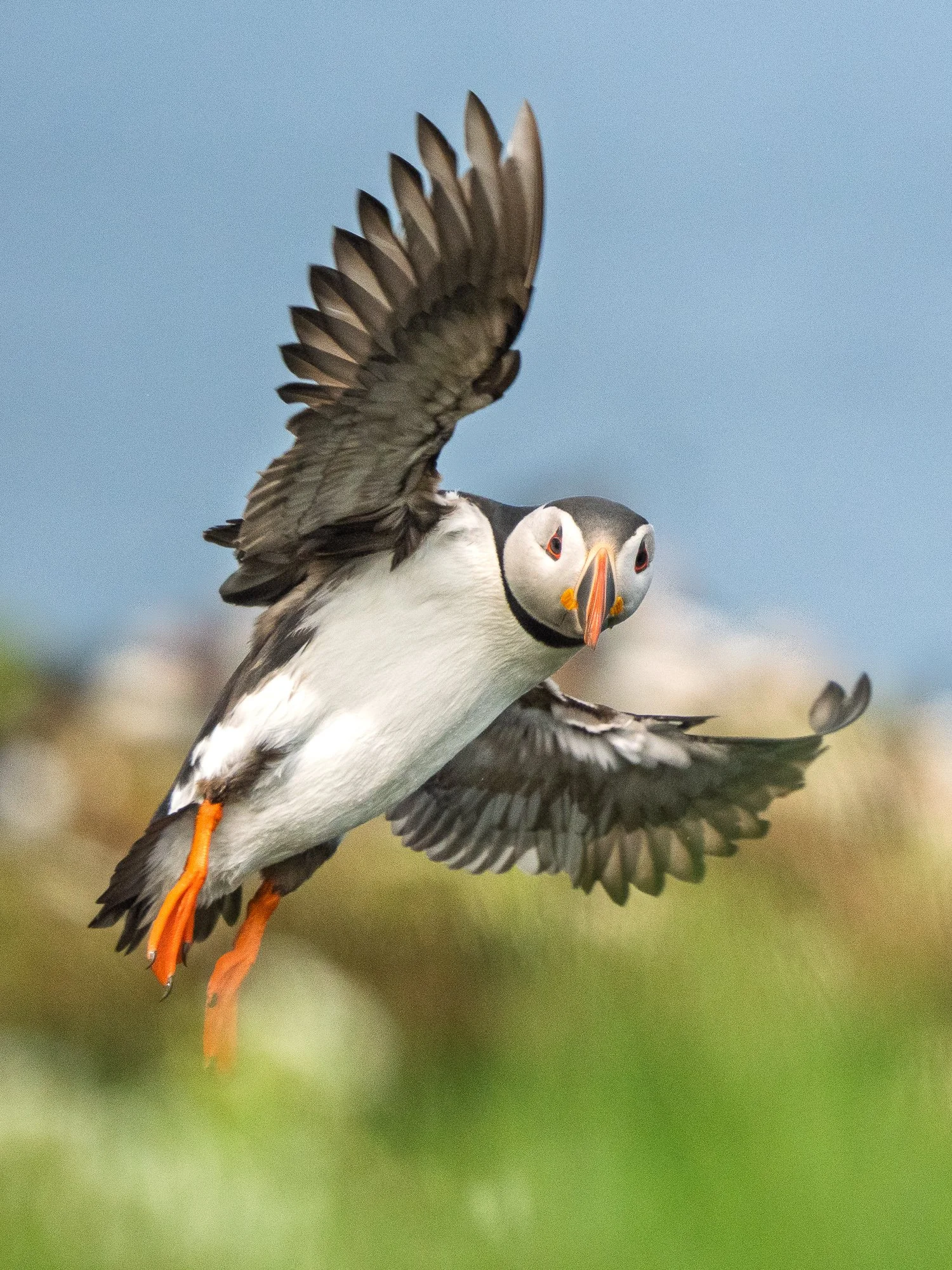
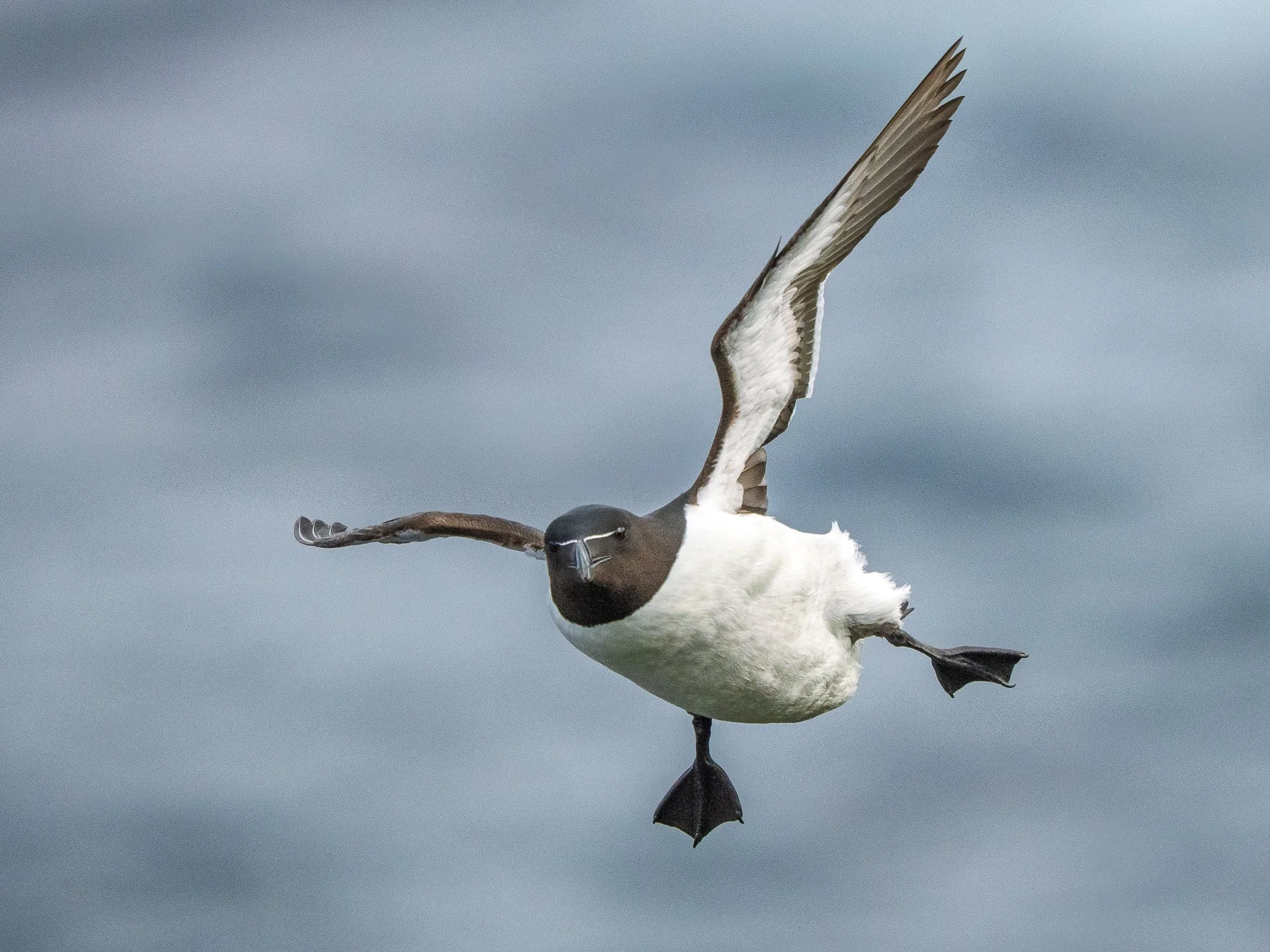
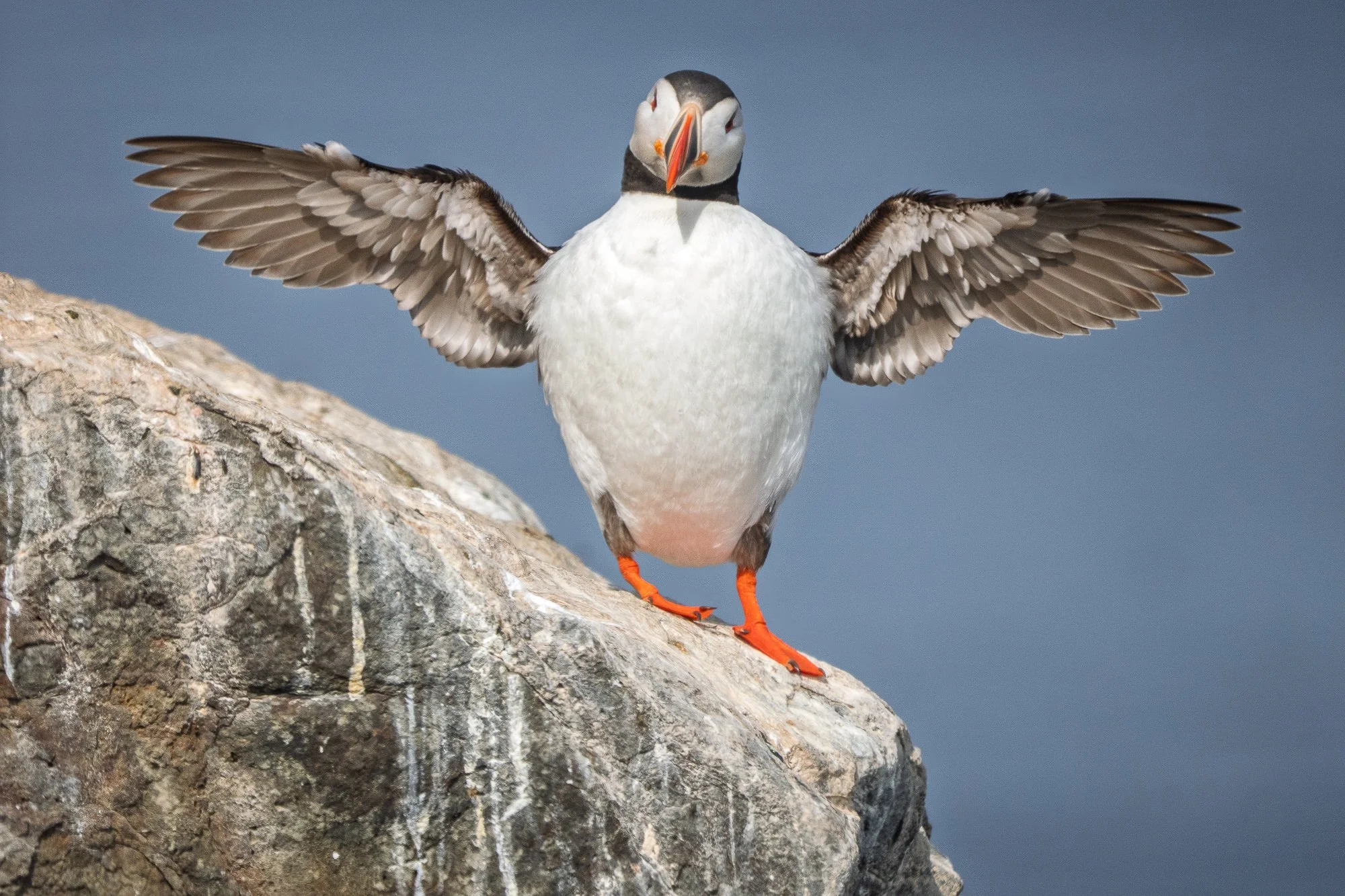
Atlantic puffins — The island hosts ~200,000 puffins, part of Iceland’s massive puffin population. They nest on grassy cliff edges and are unusually tolerant of quiet photographers, allowing frame‑filling portraits and flight shots.Auks and cliff birds — Razorbills, guillemots, and fulmars crowd the basalt cliffs, offering layered colony scenes and contrasting silhouettes.
Arctic terns — Feisty, fast, and abundant. Their hovering and dive‑bombing behavior creates dynamic action photography.
Red‑necked phalaropes — Approachable and prolific around the village pond, often in constant motion—perfect for behavior studies.
Snow buntings and more — Ground‑nesting species add variety beyond the cliffs.There is probably no better place on earth to photograph Atlantic puffins, with nearly 200,000 occupying the island. There will be puffins immediately outside our guesthouse
Grímsey lies inside the Arctic Circle, meaning the sun doesn’t set for weeks in summer. Photographers get:Hours of soft, low‑angle light
Long golden‑hour sessions
Endless opportunities to revisit colonies and refine compositions
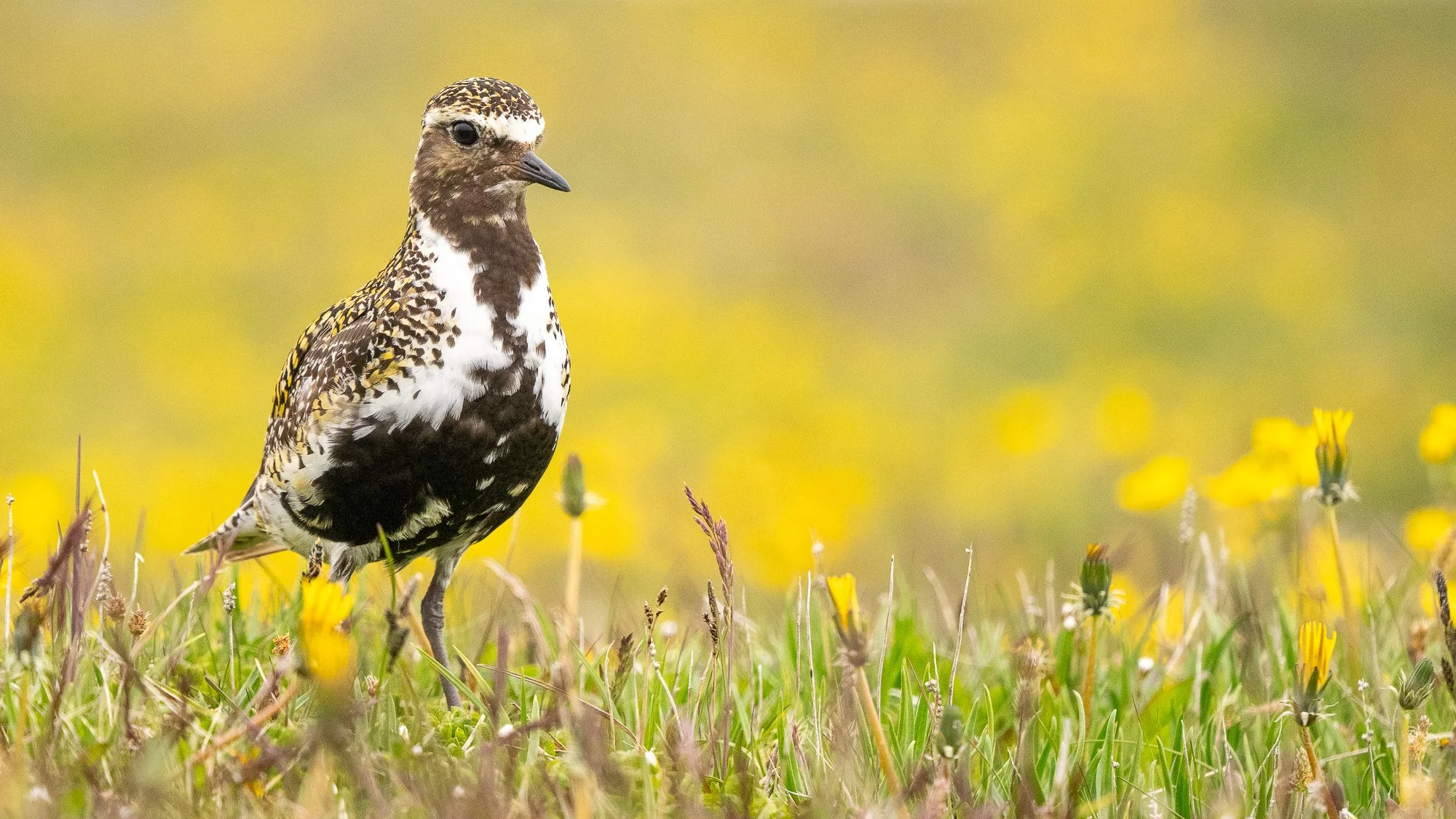
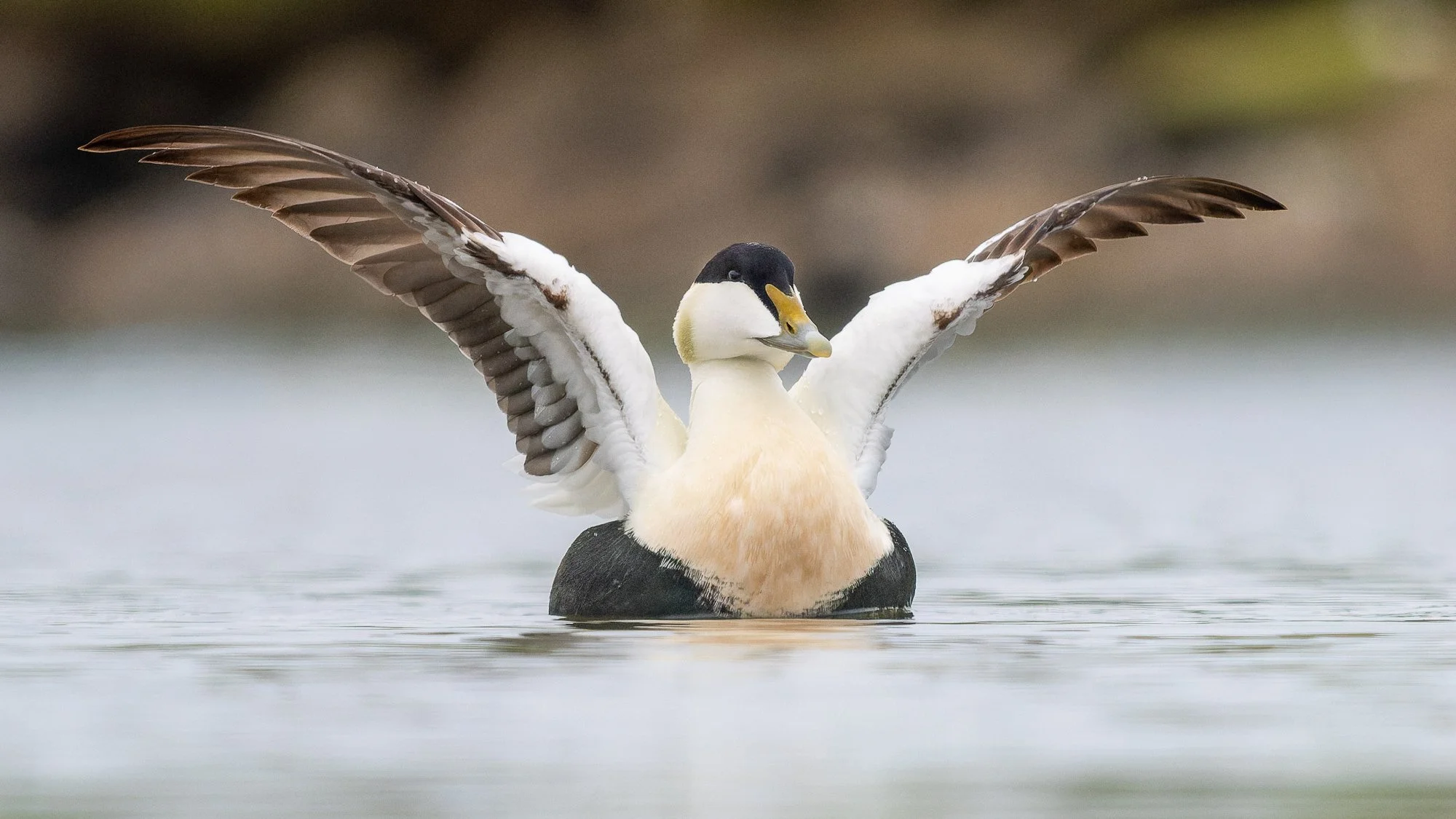
Expected Bird Species during the trip: Atlantic Puffin, Northern Gannet, Razorbill, Common Murre, Northern Fulmar, Black-legged Kittiwake, Graylag Goose, Pink-footed Goose, Whooper Swan, Common Eider, Red-breasted Merganser, Tufted Duck, Rock Ptarmigan, Golden Plover, Eurasian Oystercatcher, Black-tailed Godwit, Whimbrel, Ringed Plover, Common Snipe, Red-Necked Phalarope, Common Redshank, Sanderling, Dunlin, Purple Sandpiper, Parasitic Jaeger, Black Guillemot, Black Headed Gull, Arctic Tern, Horned Grebe, Common Loon, Red-Throated Loon, Raven, White Wagtail, Meadow Pipit, Snow Bunting
Other possible birds: Red Phalarope, Harlequin Duck, common goldeneye, Long-tailed Duck
ITINERARY - June 23-July 3, 2027 (2nd trip is reversed)
JUNE 23 - ARRIVAL TO ICELAND
June 30 is the latest you should arrive in Iceland. The international airport is in Keflavik and flights from the USA arrive in the early morning. You will need to arrange for a ground transfer (many easy options...bus, taxi, private transport) from Keflavik to Reykjavik (about 45 minute drive). You will need to book a hotel room in Reykjavik for the night of June 30.
You will arrive at your hotel at mid-morning and early check-in may not be available. This means that you may have to hang out in the hotel lobby until mid-afternoon or store your luggage at the hotel and explore Reykjavik. I usually book two nights (June 29th and 30th) so that I can check in upon arrival at the hotel in the mid-morning.
JUNE 24 - REYKJAVIK to LANGANES PENINSULA
Our tour starts in Reykjavik in the morning, and we'll be flying from the Domestic Airport in Reykjavik to the town of Akureyri. We will pick up our van and make our way to the Langanes Peninsula in the northeast. We'll make regular stops along the way where we may have our first encounter with some of Iceland's common moorland birds, such as Whimbrel, Golden Plover, Redshank and Snipe. The aim is to arrive at Langanes Peninsula in the late afternoon and venture out to a Northern Gannet colony in the evening. The Gannets are breeding on a rock stack slightly offshore, but they soar by the cliffs where we can safely photograph them. We will then spend the next two nights at a nearby guesthouse located on a working sheep farm.
JUNE 25 - LANGANES PENINSULA
In order to accommodate for possible foggy conditions on the northeast coastline we will spend two nights at a guesthouse in the Langanes peninsula. This will give us additional photo opportunities with the gannets. We will also explore the rest of the peninsula on the search for other birds, such as; arctic tern, black-tailed godwit, common eider, European oystercatcher, whooping swan and much more.
JUNE 26 - LANGANES PENINSULA to AKUREYRI
We may return to the Gannets in the morning, depending on our success the previous evening. Then we'll eventually start traveling back west, going through an area with a few pairs of Red-throated Loons breeding on small ponds. The vast open tundra of Melrakkasletta also holds an impressive number of birds, with big numbers of Eider Ducks present. This area is very remote and has a High-Arctic feeling to it.
We may also pass through the Lake Myvatn region. It is a heaven for breeding waterfowl and although this is not the prime time for ducks, as they have started molting, there are a number of other species present at Myvatn and its outflowing Laxa River. Some of the ducks might have ducklings and although Horned Grebes have lost their tuft feathers, they should have chicks. Lake Myvatn and its surroundings never disappoint bird photographers at any time of the year. We will also likely stop at a couple of areas along the way to enjoy and photograph the spectacular landscapes of Iceland, including waterfalls and a geothermal area. At the end of the day we'll be at a hotel in Akureyri.
JUNE 27 - FERRY to GRIMSEY ISLAND
We'll board the ferry to Grimsey Island in the morning and do the three-hour crossing. This is a good opportunity to be on watch for whales and seabirds and we'll have sightings of Fulmars, Black-legged Kittiwakes and Arctic Terns from the ferry, just to name a few. When we arrive to the island we'll settle into our accommodation. I have booked a guesthouse for our group. The guesthouse is ideally located outside the main village and there are Puffins nesting just steps from the front door. There are indeed Puffins nesting all around the small island and it is by far the best place in Iceland for Puffin photography. Although the island is small, it is too large to walk from one end to another with camera gear so we'll have a vehicle with us so that we can freely move around and choose shooting locations according to the light and weather conditions.
JUNE 27-JULY 2 - GRIMSEY ISLAND
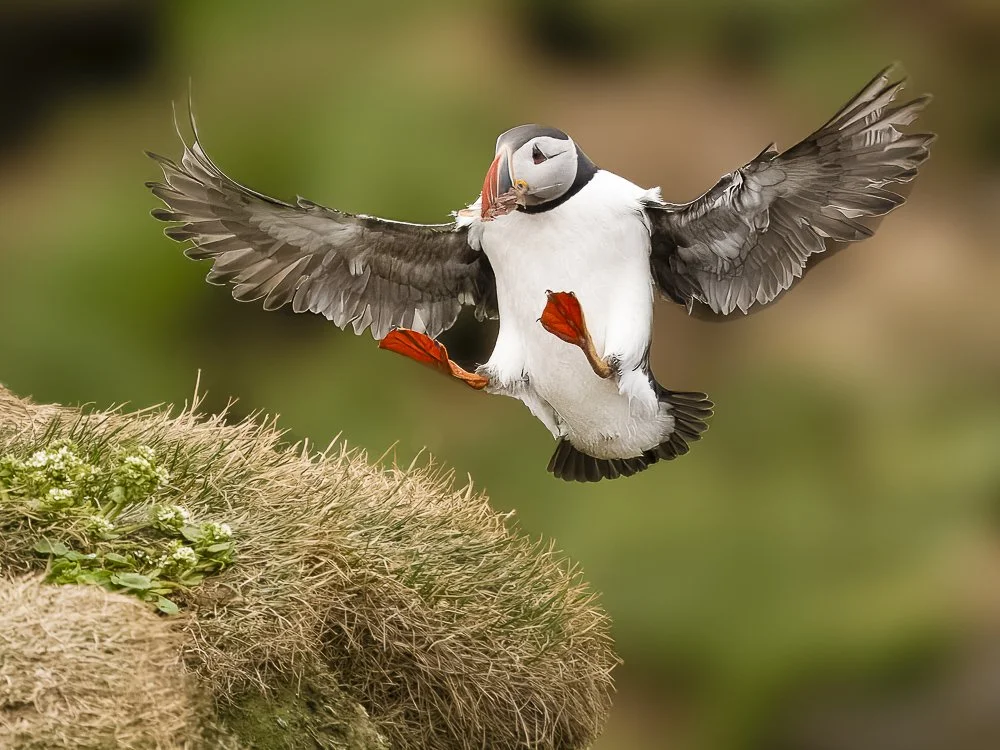
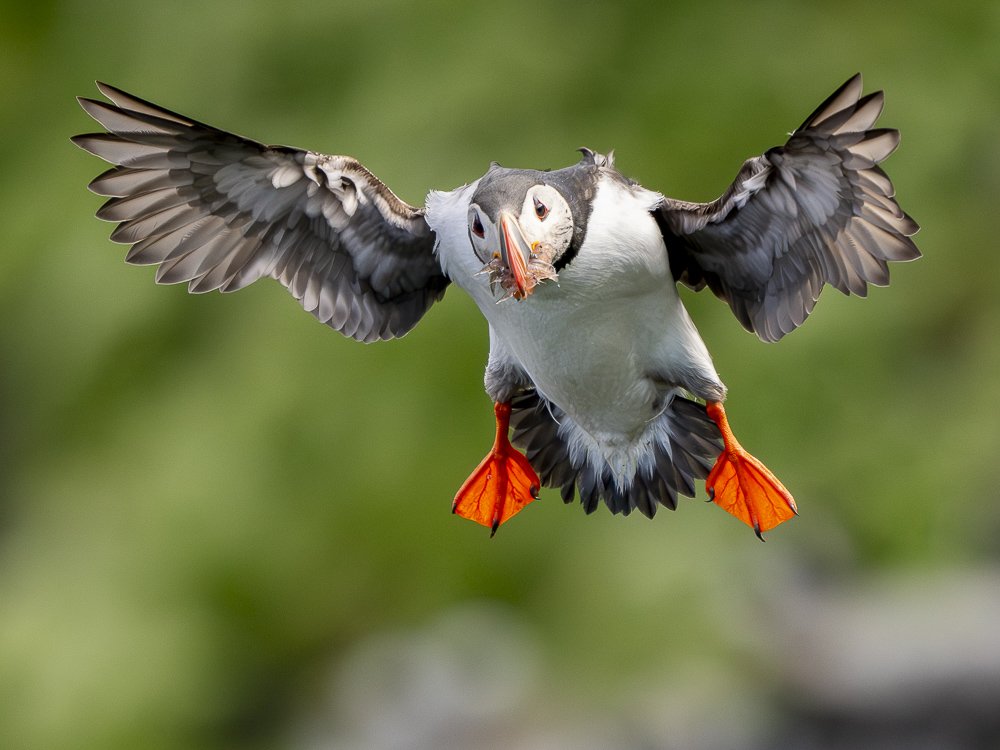
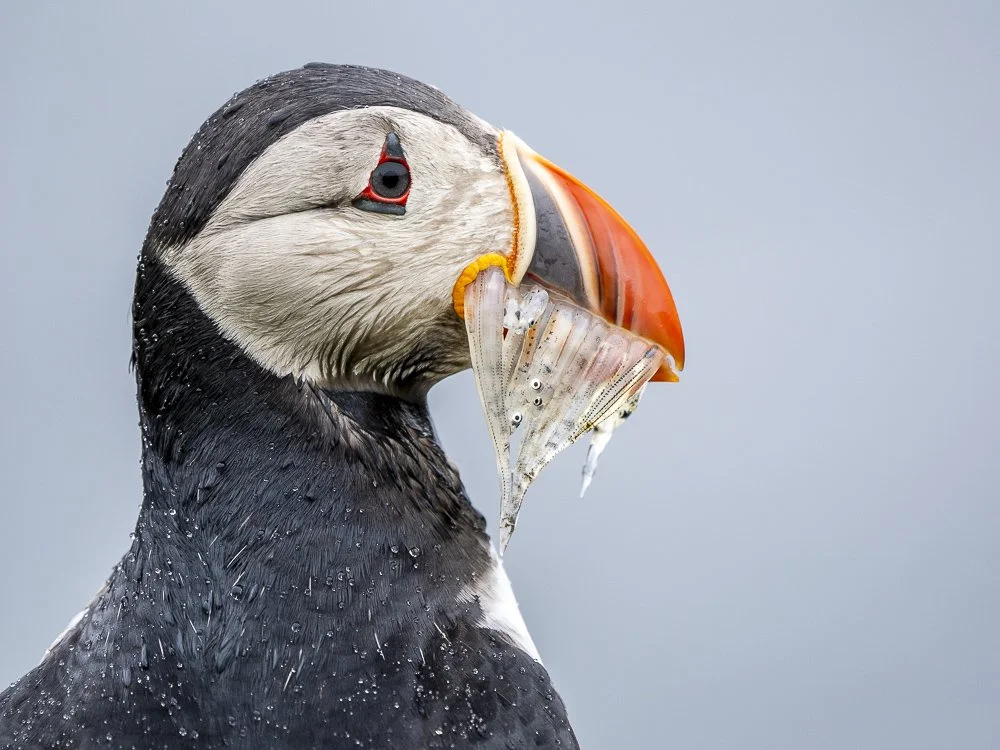
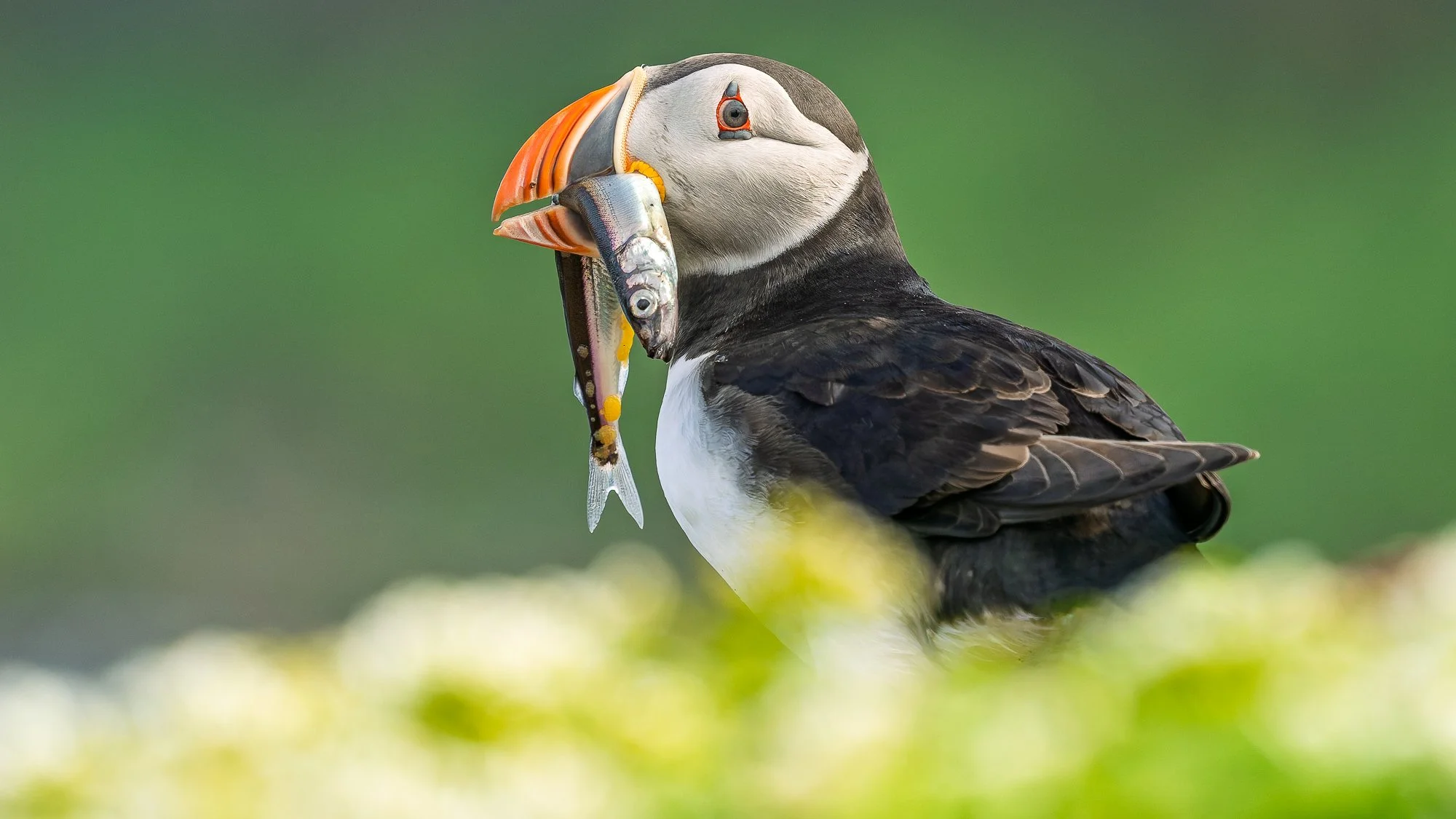
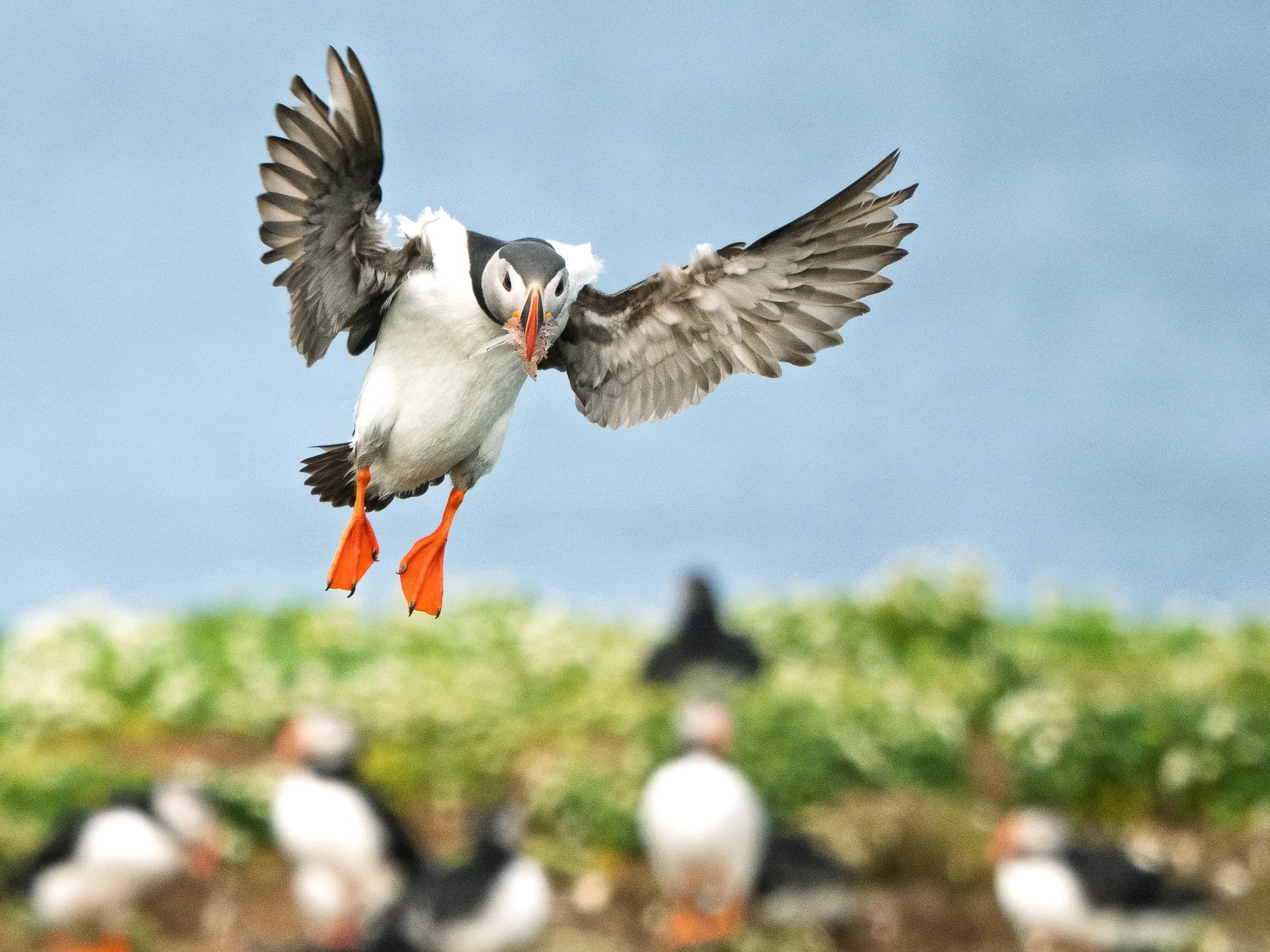
Six full days of bird photography on Grimsey will give us repeated opportunities for capturing Puffins in flight and hanging around the colonies. At this time of year, they will be starting to feed their chicks (pufflings) and nesting birds can be seen with beaks full of catch. Apart from the Puffins this is a prime location for Razorbills, another very handsome representative of the Auk family. And while the cliffs are packed with seabirds there are also several other Arctic birds breeding on the island. Arctic Terns nest just outside the guesthouse and so do a few pairs of Ringed Plover and Golden Plover. Red-necked Phalaropes can be seen regularly and Red Phalaropes have also been spotted in the last two years. Snow Buntings are common breeders on the island and Purple Sandpipers can also be photographed along the shoreline. At this time of year, the sun does not set but it does skip along the horizon providing many hours of golden light when the conditions are right. This unique island provides some of the finest bird photography opportunities in Iceland.
JULY 2 - FERRY TO DALVIK
The ferry does not leave Grimsey until the late afternoon, so we'll have a morning and afternoon photography session before boarding the ferry. We will spend the night at a hotel in Akureyri.
JULY 3 - RETURN to REYKJAVIK
You will have a morning flight from Akureyri to the Domestic Airport in Reykjavik. From there, you can make your way to the international airport in Keflavik for flights departing Iceland...or you may continue to explore Iceland on your own.

Grimsey Island
Additional Trip Info
About the accommodations
Two nights will be in regular hotels or guesthouses (Dalvik, Akureyri). The 5 nights out at Grimsey Island are in a guesthouse that has shared bathrooms. The guesthouse in the northeast (Langanes) is on a working sheep farm and offers accommodation for 2 nights in spacious studio apartments with a kitchenette and a private bathroom.
About the food
While on the Langanes Peninsula (2 nights), all meals are included. While on Grimsey Island (5 nights), all meals will be home-cooked/prepared and included in the trip cost. However, guests often like to eat one lunch and one dinner at the only restaurant on Grimsey.
FACTS ABOUT THE PHOTO TOUR
DATES: June 30-July 10, 2027
GROUP SIZE: 8 guests
COST $6450 per person (Shared Accommodation), $7450 per person (Single Accommodation)
INCLUDED IN THE TOUR COST:
• 9 nights of lodging
• All meals while on Grimsey Island (6 days) and Langanes (2 days)
- All transportation (Round-trip Air between Reykjavik and Akureyri, Ground Transport during entire tour, Ferry to/from Grimsey Island)
• Coaching from a highly experienced photo leader
• magnificent scenery and wonderful wildlife encounters
EXCLUSIONS:
• any pre- or post-tour expenses including flights and transfers
- any lodging before or after flights between Reykjavik and Akureyri
• travel insurances
- any gratuities
• anything else not specified as included
PAYMENT SCHEDULE AND TERMS:
$1500 deposit at registration
Final Payments due 90 days prior to start of trip